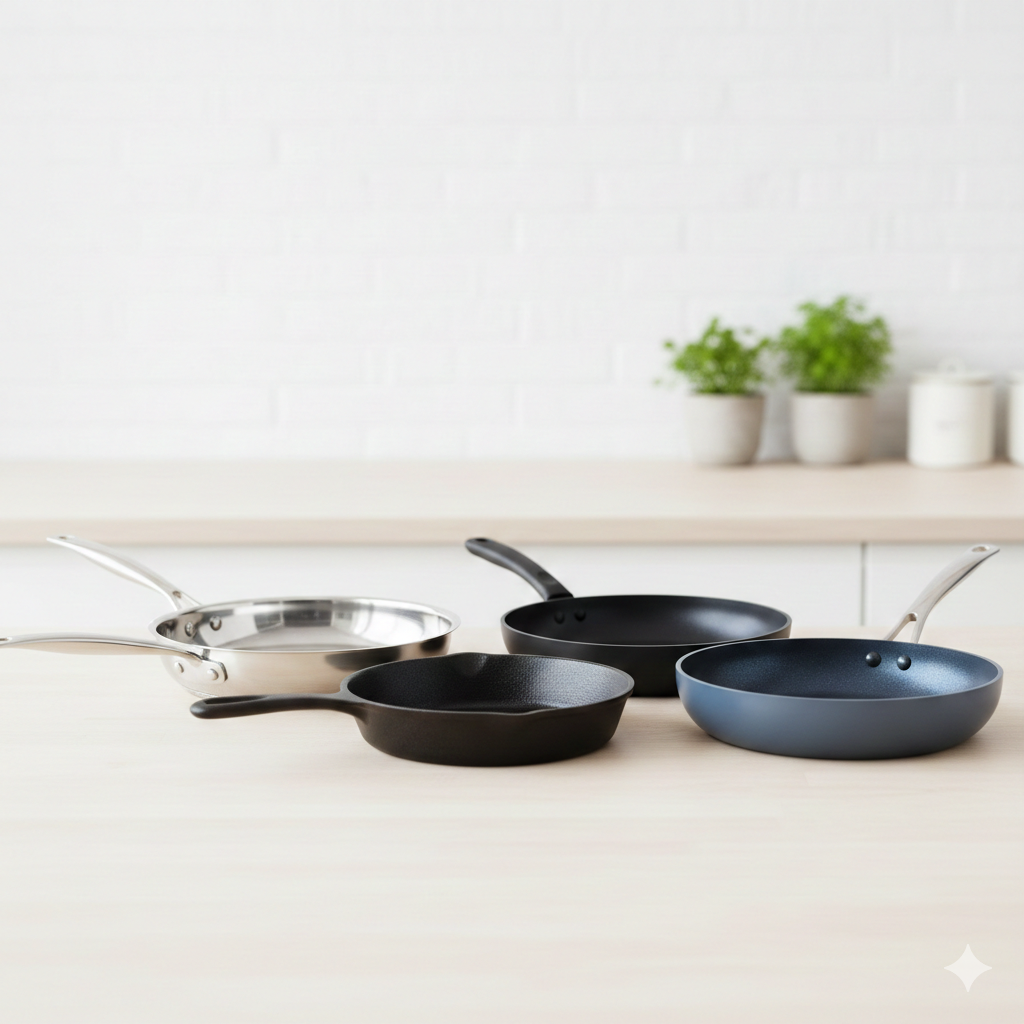
Frying Pans 101: The Nurturing Chef's Guide
Welcome to the kitchen! Think of your frying pans as the "workhorses" of your culinary battery. You don’t need a 20-piece set; you just need the right material for the right task. Here is your Mise en Place for understanding pan materials, usage, and the best value for your hard-earned money.
1. Material Comparison
| Material | Best For | Pros | Cons |
|---|---|---|---|
| Stainless Steel | Pan sauces, searing, deglazing. | Indestructible, non-reactive (acid-safe). | Food sticks if heat isn't managed. |
| Cast Iron | Steaks, deep frying, baking. | Incredible heat retention, "for life." | Heavy, slow to heat up, needs care. |
| Carbon Steel | Eggs, fish, stir-frying. | Lightweight, naturally non-stick patina. | Requires seasoning; no acidic foods. |
| Non-Stick | Delicate crepes, low-fat eggs. | Zero sticking, easiest cleanup. | Short lifespan; no high-heat searing. |
2. How to Use & Clean Like a Pro
Stainless Steel (The Professional Choice)
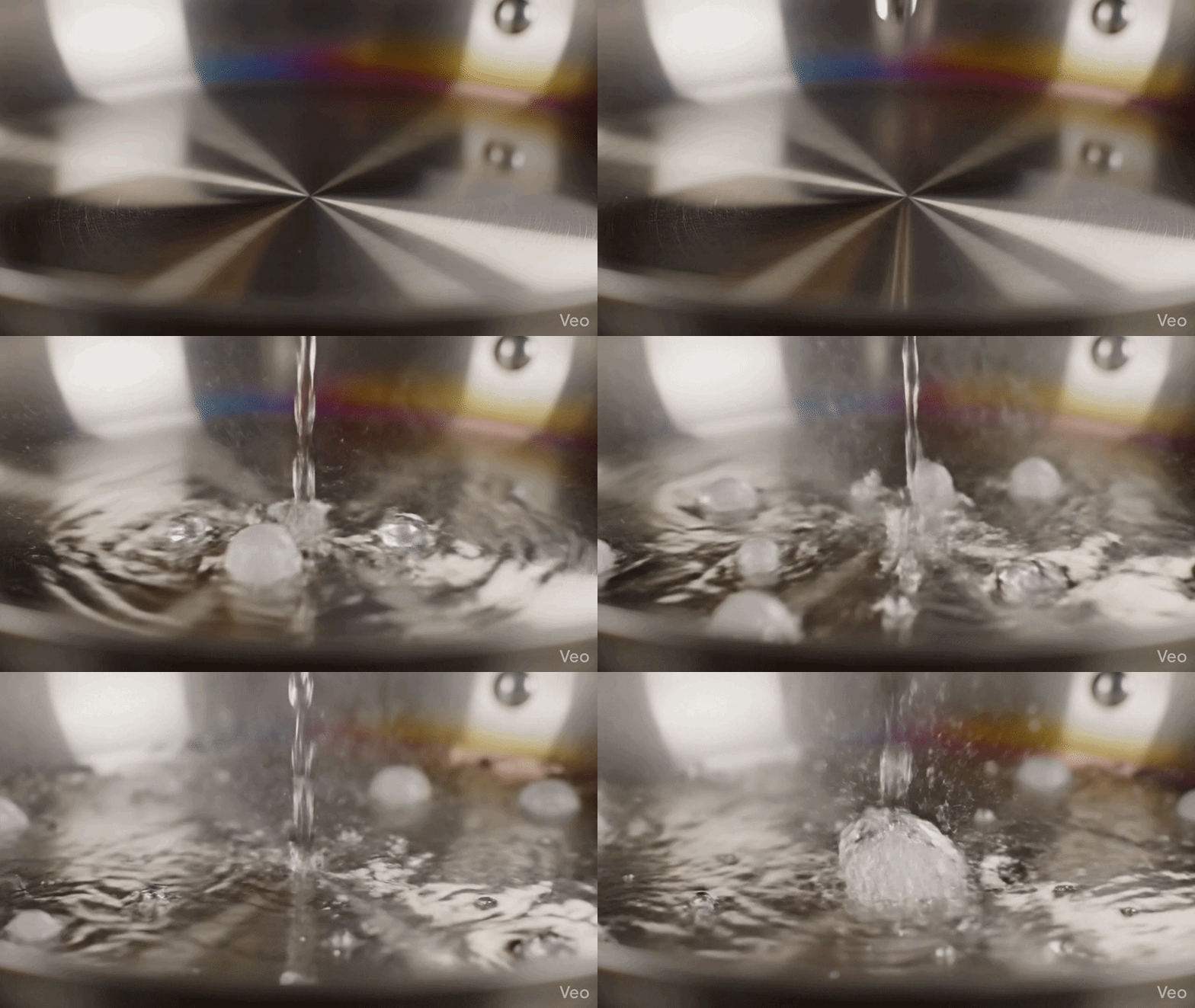
- Use: Always preheat. Use the Leidenfrost Effect: drop a bead of water in the dry pan; if it balls up and dances like a marble, it's ready for oil and food.
- Clean: Safe for soap and scrubbing. For stubborn burnt bits, boil a little water with baking soda in the pan to loosen them.
Cast Iron (The Heirloom)
- Use: Preheat slowly (5–10 mins). It’s a "heat battery"—once it’s hot, it stays hot even when cold meat is added, ensuring a perfect crust.
- Clean: No dishwasher! Use hot water and a stiff brush. Dry immediately on a warm stovetop and rub with a tiny drop of oil to prevent rust.
Carbon Steel (The Chef's Secret)
- Use: Treat it like a lighter, more responsive version of cast iron. It changes temperature quickly, making it the king of omelets and sautéed fish.
- Clean: Wipe with a paper towel and a drop of oil. If food sticks, use a "salt scrub" (coarse salt and a little oil) to gently buff the surface.
Non-Stick (The Specialist)
- Use: Low to medium heat only. High heat destroys the coating. Use only silicone or wooden utensils to avoid scratches.
- Clean: Soft sponge and mild soap. Hand-wash only; dishwasher detergents are too abrasive for the delicate coating.
[Pro-Tip]: If your stainless steel pan develops "rainbow" spots, it's just mineral buildup from water. A splash of white vinegar and a quick wipe will make it shine like new!
[IMAGE PLACEHOLDER: A close-up of a golden-brown chicken breast being flipped in a shiny stainless steel pan, showing the caramelized "fond" on the bottom.]
3. Buying Guide: The Best Tiers (2026)
If you are buying your first "serious" pan, start with a 26–28 cm Stainless Steel Tri-Ply. It is the most versatile tool you can own.
The "Best That Money Can Buy" (Professional Tier)
- Stainless: Demeyere Atlantis 7-Ply. No rivets on the inside (easier cleaning) and unmatched heat stability.
- Cast Iron: Staub Enameled. The black enamel interior doesn't require seasoning and resists acidic foods better than raw iron.
- Carbon Steel: de Buyer Mineral B Pro. Features a stainless steel handle that stays cool on the stovetop.
The "Very Good for the Value" (Enthusiast Tier)
- Stainless: All-Clad D3. The industry standard. It's durable, perfectly balanced, and used in top kitchens worldwide.
- Non-Stick: Made In Non-Stick. Multiple layers of professional-grade coating that last longer than department store brands.
- Carbon Steel: Misen. Often comes pre-seasoned and has a very comfortable handle for home cooks.
The "Best Value for Money" (Smart Buyer Tier)
- Stainless: Tramontina Tri-Ply Clad. Often performs nearly as well as pans triple its price in heat distribution tests.
- Cast Iron: Lodge 12-inch. A classic. It’s rugged, affordable, and will literally last 100 years.
- Non-Stick: T-Fal Professional. Inexpensive enough to replace every 2–3 years without guilt once the coating inevitably fades.
[IMAGE PLACEHOLDER: A stack of three pans—a cast iron at the bottom, stainless steel in the middle, and non-stick on top—showing a complete "starter set."]
Would you like me to help you find a specific size or brand recommendation based on the type of stove (induction vs. gas) you have?